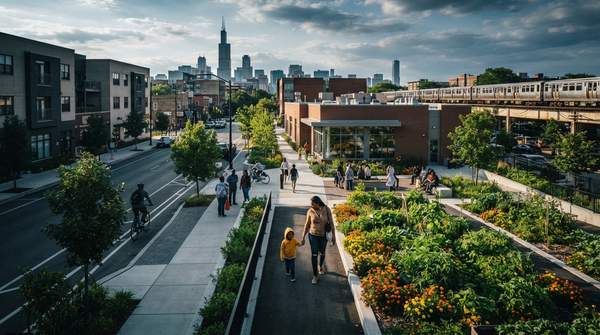
Despite state laws allowing projects to receive up to 50% additional residential density, the Pasadena City Council recently denied an appeal for a 133-unit affordable housing development at 600 North Rosemead Boulevard, according to Pasadena Star News and sfplanning. The denial of the appeal affects residents seeking more housing options.
State laws mandate significant increases in housing density and streamlined approvals. However, local jurisdictions continue to exercise control, sometimes blocking projects that align with state goals. The tension between state laws and local control hinders efforts to address city building code changes for housing shortage solutions in California.
The ongoing tension between state mandates and local autonomy will likely lead to a patchwork of housing development successes and failures. Significant growth will concentrate where local and state priorities align or where state preemption is strongest.
State law also grants density bonuses for lower-income student housing, according to leginfo. Furthermore, AB 1751 requires local jurisdictions to ministerially process qualifying townhome projects, including parcel maps or tentative and final maps, according to JD Supra. AB 1751 and density bonuses highlight state efforts to bypass local discretion.
- California state law allows projects to receive up to 50% additional residential density over the maximum allowable residential density, according to sfplanning.
- A city, county, or city and county must grant a density bonus and other incentives if an applicant builds a student housing development with 20% of total units for lower-income students, according to leginfo.
- The Pasadena City Council recently denied an appeal for a 133-unit affordable housing development at 600 North Rosemead Boulevard, according to Pasadena Star News.
- AB 1751 requires local jurisdictions to ministerially process qualifying townhome projects, including parcel maps or tentative and final maps, according to JD Supra.

Future Directives and Innovative Approaches
Los Angeles, San Diego, San Jose, San Francisco, Sacramento, Oakland, and Long Beach must designate regional transit hub districts by July 1, 2027, under AB 2074, according to JD Supra. The designation of regional transit hub districts by July 2027 under AB 2074 aims to accelerate housing development near transit.
Qualifying housing projects within these districts will receive streamlined ministerial review and approval, exempting them from CEQA, according to JD Supra. Streamlined ministerial review and CEQA exemption for qualifying housing projects targets specific areas to bypass local resistance and address new building codes.
Pasadena passed an adaptive reuse ordinance last year, helping to repurpose vacant office buildings for housing, according to Pasadena Star News. Pasadena's adaptive reuse ordinance offers an alternative path to increasing housing supply, separate from state mandates.
California's housing crisis will persist as long as local councils, like Pasadena's, can effectively nullify state mandates for increased density and affordable housing projects. Local councils nullifying state mandates occurs even when those projects align with state incentives for density bonuses, according to Pasadena Star News and sfplanning.
The state's strategy of mandating specific 'transit hub districts' and ministerial processing, as detailed by JD Supra, reveals an acknowledgment that broader density bonus laws are insufficient. The state's strategy forces a more targeted, top-down approach to bypass entrenched local resistance.
While state mandates struggle, local initiatives like adaptive reuse ordinances, reported by Pasadena Star News, offer a pragmatic, albeit slower, path to increasing housing supply. Local initiatives suggest bottom-up innovation might be more effective than top-down legislative pressure in some areas.
What are the new building codes?
While comprehensive statewide building code changes for 2026 focusing on housing density are still evolving, some specific mandates are taking effect. For instance, AB 1751 requires local jurisdictions to ministerially process qualifying townhome projects, according to JD Supra. Additionally, new state laws encourage significant density bonuses for affordable and student housing developments.
How will building code changes affect housing prices?
The impact of new building code changes on housing prices in 2026 is complex. Increased density allowances, such as the 50% additional residential density permitted by state law, could eventually increase supply, potentially moderating price growth, according to sfplanning. However, local resistance and project denials, like the one in Pasadena for a 133-unit affordable development, could limit new construction and maintain upward pressure on prices, as reported by Pasadena Star News.
What is the impact of new building codes on affordable housing?
New state laws and building code reforms aim to significantly encourage affordable housing through density bonuses and streamlined approvals. For example, state law grants density bonuses for lower-income student housing developments, according to leginfo. However, local discretion can still impede these projects, as shown by the Pasadena City Council's denial of a 133-unit affordable housing appeal, according to Pasadena Star News.
By July 1, 2027, major cities like Los Angeles, San Diego, and San Francisco must designate regional transit hub districts. The designation of regional transit hub districts by July 1, 2027, mandated by AB 2074, is expected to accelerate housing projects through streamlined approvals, according to JD Supra.