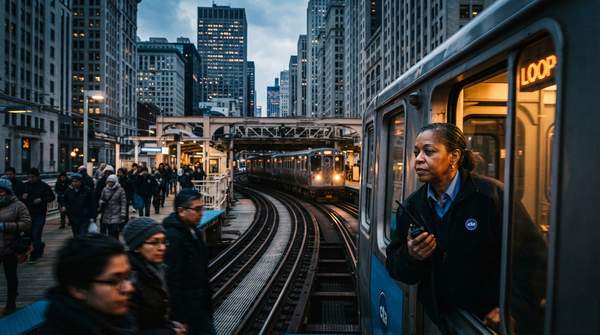
As urban centers around the globe continue to expand, the question of how to grow sustainably becomes ever more urgent. The answer, in large part, lies not in futuristic technologies but in a foundational public good: a robust, accessible, and efficient public transportation system. Prioritizing public transit is more than a strategy to reduce traffic congestion; it is a powerful engine for creating cities that are environmentally sound, socially equitable, and economically vibrant. By weaving together these three pillars of sustainability, investment in public transport offers a comprehensive solution to some of the most pressing challenges of modern urban life.
The United Nations’ Sustainable Development Goals for 2030 explicitly call for providing "access to safe, affordable, accessible and sustainable transport systems for all … notably by expanding public transport." Yet, a 2022 assessment found that just over half the world's residents lived within a short walk of frequent public transit, highlighting a significant gap between ambition and reality. Closing this gap is essential, as well-planned cities with integrated transit form the bedrock of sustainable growth, social inclusion, and economic vitality.
The Three Pillars of Sustainable Urban Transit
The case for prioritizing public transit rests on a framework of interconnected benefits that reinforce one another. Understanding these three pillars—environmental sustainability, social equity, and economic vitality—reveals how a single investment can yield multifaceted returns for a city and its residents.
Environmental Sustainability
The environmental argument for public transit is perhaps the most widely understood. Transportation is the world's fastest-growing source of energy-related carbon emissions, according to a World Bank blog post, and urban transport is the largest contributor within that sector. Public transportation directly confronts this challenge, producing up to 45% fewer carbon dioxide emissions per passenger-kilometer compared to private vehicles, as noted by the Institute for Transportation and Development Policy. By encouraging a shift away from private cars, cities can achieve significant reductions in greenhouse gases and improve air quality. Furthermore, this shift has lasting effects on urban form. Mass transit promotes livable density and helps prevent urban sprawl, a decision that can positively influence a city's carbon footprint for decades to come.
Social Equity
Beyond its green credentials, public transit is a powerful tool for social justice. The ability to move affordably and efficiently is fundamental to upward mobility, creating access to jobs, education, and essential services. An equitable transit system ensures that all residents, regardless of their income, age, physical ability, or address, can fully participate in the economic, civic, and social life of their community. This is particularly crucial for lower-income residents and essential workers who may not have access to a personal vehicle. By connecting people to opportunities, public transit helps dismantle systemic barriers and fosters more inclusive and cohesive communities.
Economic Vitality
The economic benefits of investing in public transportation are substantial and well-documented. A 2014 study by the American Public Transportation Association found that for every $1 billion invested in public transportation, there is a net economic benefit of $3.7 billion. This investment also serves as a powerful job creator, supporting over 50,000 jobs for every billion dollars spent. The benefits extend beyond direct returns. Major transit infrastructure projects, such as metro and light-rail systems, are known to drive significant urban development and influence land values. While these systems are costly to build, studies show that their long-term public benefits far exceed the initial investment costs, making them a smart, strategic choice for urban economies.