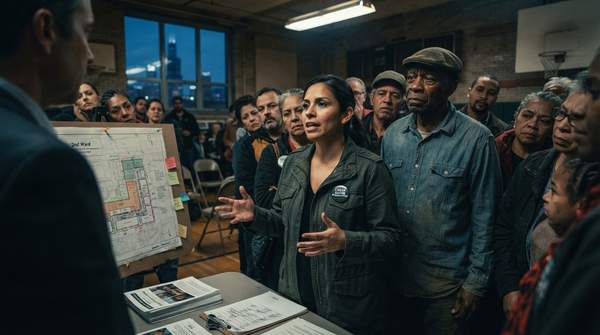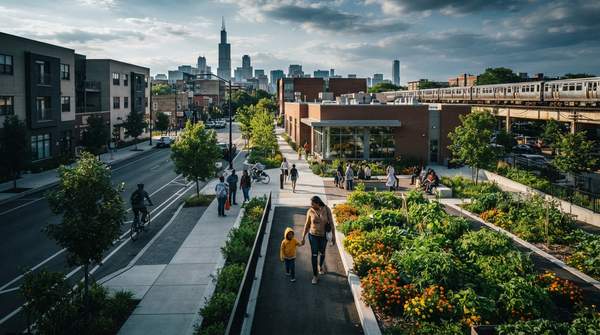
Chicago is trying to close one of the starkest health divides in the country with a pair of plans that treat neighborhood design as a public health intervention. West Garfield Park residents live to an average age of 69, compared with 85 for people living in the Loop, according to reporting by Block Club Chicago. The city's response runs on two levels: a neighborhood-level Quality-of-Life Plan for Garfield Park that pairs food access and commercial revitalization with youth and education programs, and a citywide health equity strategy whose progress residents can track on the official Chicago Health Atlas.
Chicago's Commitment to Health Equity Through Urban Planning
The premise behind both efforts is that health is shaped less by clinics than by the conditions of daily life — where people can buy food, whether their commercial corridors have jobs, and what opportunities reach their teenagers. A Regional Plan Association report on pathways to health equity notes that in Chicago, multi-disciplinary regional strategies are working to restore what it calls the historic link between urban planning and public health. That framing matters: it treats zoning, land use and neighborhood investment as health policy, not just economic development.
Chicago's own planning documents have made that link explicit for years. The PHRASES initiative, a public health communication project, describes the city as one of the nation's most segregated, with dramatic differences in life expectancy across neighboring communities. The Garfield Park plan is a concrete test of whether that planning-for-health approach can reach a specific West Side community.
Healthy Chicago 2025: A City-Wide Vision for Well-being
The citywide strategy is Healthy Chicago, the Chicago Department of Public Health's plan to improve health equity across the city. Its predecessor, Healthy Chicago 2.0, set the template: a sweeping initiative that brought partners together around 200 specific actionable strategies to improve health equity throughout the city. "The plan made it clear that we were putting a stake in the ground to really address social determinants of health and disparities," said Julie Morita, who served as Commissioner of the Chicago Department of Public Health until early 2019.
That earlier plan's focus on building strong communities and equitable opportunity established a consistent strategic direction: rather than treating health as a matter of individual behavior, the city committed to changing the underlying neighborhood conditions that produce unequal outcomes. Healthy Chicago 2025 continues that citywide equity agenda, and the Health Atlas is the tool the city points to for watching whether it is being implemented.