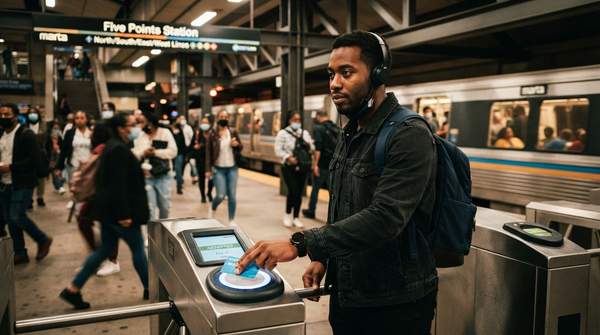
For most visitors, the cheapest way to ride Chicago’s buses and trains is a Ventra unlimited-ride pass loaded onto a card you already have. A single CTA train ride costs $2.50 and a bus ride $2.25, so anyone making more than two or three trips in a day will usually save money with a pass. The Ventra system also lets you skip buying a physical card entirely by tapping a contactless bank card or a phone wallet at the turnstile. Here is how to match the payment method and fare product to your trip.
Understanding Ventra: Your Gateway to Chicago Transit
Ventra is the name of the Chicago Transit Authority’s fare system, and it is the payment layer for both CTA and Pace buses. According to the CTA, you can buy reloadable Ventra Cards that store passes and fare value, or disposable Ventra Tickets for one-off rides. The same system also accepts personal, contactless bank cards for pay-as-you-go rides.
The base fares are straightforward. The CTA’s fare information lists a full train fare of $2.50 and a bus fare of $2.25, with transfers free — up to two additional rides within two hours. Cash is accepted on buses, but no transfers are issued when paying with cash, which is one reason regular riders favor a card. Pace bus fares run lower, at $2.00 for a full fare.
One wrinkle matters for airport arrivals: a premium fare applies at O’Hare, where the single-trip Ventra Ticket costs $5 rather than the standard $3. The CTA also sells single-trip tickets good for up to three rides within two hours of first use, and 1-Day and 3-Day disposable tickets at vending machines.
Prices are also in flux. In October 2025, CBS Chicago reported that the CTA had announced 2026 increases: the 1-Day pass rising from $5 to $6, the 7-day pass from $20 to $25, and the 30-day pass from $75 to $85, with the 3-day pass eliminated entirely. Ventra single-ride tickets were reported to rise to $3.50. The CTA’s own passes page, retrieved in October 2026, still lists the 3-day pass, so check the official Ventra site before relying on any single price.
Ventra Fare Decision Framework
The framework below classifies your situation — how long you are in town and how often you will ride — against the available products and their costs, then recommends the cheapest fit. The break-even logic is simple: compare the pass price against the pay-as-you-go cost of the trips you expect to take.
| Payment Method / Product | Cost | Best Use Case | Key Features / Limitations |
|---|---|---|---|
| Contactless bank card or phone wallet (pay-as-you-go) | $2.50 per train ride, $2.25 per bus ride | One or two trips; no card purchase needed | Works via Apple Pay or Google Pay without creating a Transit Account; no pass storage unless you add one |
| Ventra Card (physical) | $5 purchase fee, returned as transit value if registered within 90 days | Regular commuters and longer visitors using passes | Buy at vending machines, online, by phone, or at retail; registration protects a lost card’s balance |
| Ventra app (virtual card) | Same fares and passes as the physical card | Riders who prefer paying by phone | A virtual Ventra Card can only be saved on one device; add it to Google Pay, an iPhone, or an Apple Watch |
| 1-Day unlimited pass | $5, announced to rise to $6 in 2026 | A day of sightseeing with three or more rides | Unlimited rides for 24 hours from first use |
| 7-Day unlimited pass | $20, announced to rise to $25 in 2026 | A week-long visit with near-daily riding | Unlimited rides for 7 days from first use |
| 30-Day unlimited pass | $75, announced to rise to $85 in 2026 | Daily commuters | Unlimited rides for 30 days from first use |
To see the framework in action, compare a visitor’s options for a single heavy day of sightseeing. Three train rides at $2.50 each cost $7.50 pay-as-you-go. At the current $5 price, the 1-Day pass saves $2.50; even at the announced 2026 price of $6, it saves $1.50. At two train rides ($5.00), the current pass merely breaks even, and the $6 pass would cost a dollar more — so the pass only wins at three rides or more.
For a week-long visitor, the 7-day pass at $20 breaks even at eight full train rides ($20.00) within seven days, and at the announced 2026 price of $25 it takes ten rides. A daily commuter taking two train rides each workday spends $25.00 per week pay-as-you-go, which is why the CTA calls unlimited passes its best travel value: the more you ride, the more you save.