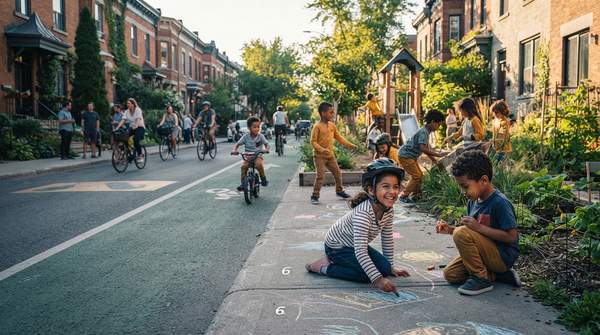
Across the country, a common pattern marks modern childhood: a life divided between structured activities and screens. The spontaneous, unstructured neighborhood play that once defined growing up has largely vanished, replaced by scheduled enrichment and digital entertainment. This shift has coincided with a rise in anxiety, loneliness, and social isolation among young people. The solution may not lie in more programs or policies, but in rebuilding the "missing village"—the local community environment that is essential for raising resilient and well-adjusted children.
A truly child-friendly neighborhood is more than just a collection of houses with playgrounds. It is a carefully cultivated ecosystem where the physical design and social fabric work together to support the core principles of healthy child development. By integrating insights from developmental science with practical community-building strategies, residents can create environments that foster independence, strong social bonds, and overall well-being for their youngest members.
The Missing Village: Why Neighborhoods Matter for Child Development
The decline of neighborhood-centric childhood is a defining paradox of our time. Parents have invested more money, supervision, and educational activities in their children than perhaps any generation in history. Yet, as author Seth D. Kaplan notes, the hours children once spent inventing games, settling their own disputes, and taking small risks in their local environment have largely disappeared. This has left a void that structured activities cannot completely fill.
The concept of the "missing village" points to the erosion of the informal, everyday interactions that once occurred in front yards, local parks, and on neighborhood streets. According to an article published by Strong Towns, this web of relationships is a powerful youth development strategy that has been overlooked in the search for solutions to modern childhood challenges. "They restore something those institutions cannot create on their own: a web of everyday relationships through which youth become resilient adults," the organization states. Rebuilding this village means intentionally creating places that are safe enough for children to play, explore, and learn resilience on their own terms.
Foundational Principles of Child Development for Thriving Communities
Creating effective, child-friendly neighborhoods requires understanding the fundamental science of how children grow and learn. Research from institutions like Harvard University's Center on the Developing Child and the National Association for the Education of Young Children (NAEYC) provides a blueprint for the types of environments that support healthy development.
Three principles are particularly relevant for community building:
- Support Responsive Relationships. According to Harvard's Center on the Developing Child, responsive relationships with adults promote healthy brain development in children and provide a crucial buffer against toxic stress. In a neighborhood, this extends beyond parents to include other trusted adults who provide emotional support and create a sense of security.
- Ensure Physical and Psychological Safety. A child's sense of belonging is deeply tied to safety. The NAEYC emphasizes that this includes not only physical safety from harm but also psychological safety, which is strengthened when children see connections between their home and their community. A neighborhood that feels welcoming and familiar is essential for this foundation.
- Foster Holistic Development. Child development is integrated across multiple domains: physical, cognitive, social, emotional, and linguistic. The NAEYC explains that each domain supports and is supported by the others. A thriving neighborhood, therefore, must offer a variety of experiences that challenge and nurture children across all these areas, from physical play to social interaction and problem-solving.