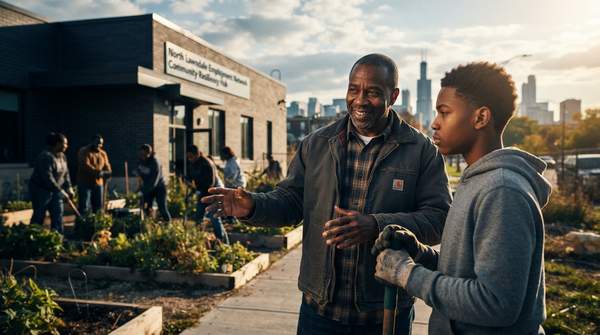
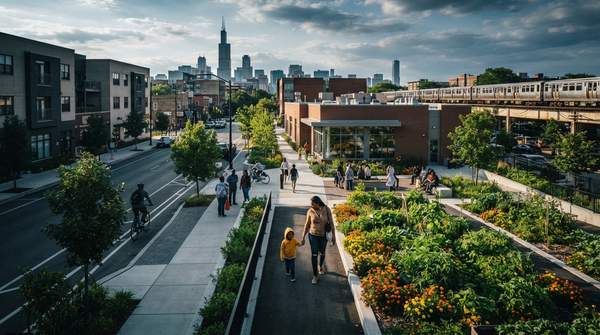
In the 1960s, Portsmouth city officials razed most of the North End neighborhood for a shopping mall and commercial development, displacing 300 families. The decision to raze most of the North End neighborhood uprooted hundreds of lives, transforming a vibrant community into a commercial zone. The 30-acre project, aimed at removing blight and improving downtown access, added parking and commercial development, according to Seacoastonline. Nationally, from 1950 to 1971, urban renewal projects displaced over 1.3 million people.
Today, cities invest heavily in revitalizing older neighborhoods with grants and programs. Yet, outcomes for existing residents are often contested, inadvertently mirroring past displacement patterns. The contested outcomes for existing residents, inadvertently mirroring past displacement patterns, reveal a persistent urban development challenge: progress often clashes with community stability.
Without a deliberate focus on resident protection and equitable benefit distribution, current revitalization efforts risk repeating historical harms, trading physical improvement for community disruption. Modern city programs, despite their community-focused rhetoric, often perpetuate the displacement and inequity of 1960s urban renewal by prioritizing physical improvements over the long-term economic stability of low-income residents. The historical displacement of over 1.3 million people serves as a stark reminder: even minor contemporary interventions, like facade grants or street improvements, risk triggering new displacement if not coupled with robust protections for existing residents.
A New Approach: Targeted Investments and Community Programs
Clifton, a city focused on community development, offers grants to homeowners for critical repairs. Its Home Improvement Program, funded through the CDBG Block Grant, provides qualified homeowners up to $10,000 to address City Housing Ordinance violations, according to Clifton. The Home Improvement Program's direct aid aims to stabilize housing for existing residents, preventing deterioration that could lead to property devaluation and displacement.
Revitalization also extends to local businesses and public infrastructure. The Facade Program uses CDBG funds to rehabilitate businesses, supporting new awnings and signs in commercial districts like Main Avenue and Botany Village. The Facade Program, now city-wide, aims to boost local commerce and enhance business corridor aesthetics, fostering economic growth and creating a more inviting environment.
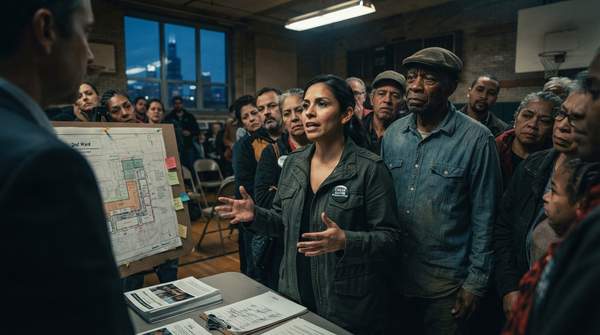
Community Development (CD) Funds also improve streets and sidewalks in income-qualified areas, including the renovation of Municipal Lot Number 8 (First Street Parking Lot). Improvements to streets and sidewalks, including the renovation of Municipal Lot Number 8, reflect a modern revitalization approach, prioritizing incremental improvements over large-scale demolition. The prioritization of incremental improvements over large-scale demolition aims to enhance physical conditions within vulnerable neighborhoods, ostensibly supporting residents and local economies.
The shift from explicit 'blight removal' to targeted improvements in 'income-qualified areas' marks a subtle but significant evolution in urban renewal tactics. While the language suggests compassion, improving physical conditions can inadvertently precede gentrification. By making neighborhoods more attractive without addressing the economic vulnerabilities of low-income communities, these programs risk displacing the very people they intend to help. The strategy of making neighborhoods more attractive without addressing economic vulnerabilities, though seemingly benevolent, often sets the stage for new residents and higher property values, sidelining long-term community members.
Modern city revitalization programs leverage diverse funding to address specific needs, aiming for incremental improvements and direct resident support—a clear departure from past wholesale demolition. However, this evolution demands careful scrutiny to ensure benefits truly accrue to existing residents, not merely pave the way for a new demographic.
The Contested Outcomes: Who Truly Benefits?
Despite good intentions, city revitalization's actual impact on existing residents often proves controversial. Vacant housing revitalization efforts, for instance, influence physical and social environments, along with structural determinants of resources and community engagement, impacting residents' health, according to pmc.ncbi.nlm.nih.gov. The findings that vacant housing revitalization efforts influence physical and social environments, along with structural determinants of resources and community engagement, impacting residents' health, suggest that what officials categorize as "improvement" may not translate into equitable health and social benefits for existing residents. Physical upgrades, like converting vacant lots or improving facades, can inadvertently disrupt community structures and increase living costs. The dynamic of physical upgrades inadvertently disrupting community structures and increasing living costs creates instability and displacement, even without explicit forced relocation, revealing a fundamental misalignment between municipal intentions and actual community impact. For many long-term residents, perceived benefits are overshadowed by rising property taxes, increased rents, and a loss of familiar cultural spaces. New green spaces or improved infrastructure, while appearing beneficial, can attract wealthier residents, driving up housing costs and making the neighborhood unaffordable. New green spaces or improved infrastructure, by attracting wealthier residents and driving up housing costs, cause "soft" displacement, pushing out lower-income families without direct eviction notices.
Changes to the physical environment, such as new housing or commercial spaces, can affect air quality, noise, and access to affordable services. Social environment shifts, including new demographics, disrupt established networks and support systems, leading to increased stress and isolation among long-term residents. These structural determinants of resources and community engagement directly impact health outcomes. Revitalization efforts, therefore, must consider a broader range of effects beyond aesthetics or property values, recognizing that a community's long-term well-being extends far beyond its physical appearance.
If revitalization efforts continue to prioritize physical upgrades over direct economic empowerment and robust resident protections, they will likely perpetuate a cycle of 'soft' displacement, leaving long-term residents behind even as their neighborhoods outwardly improve.