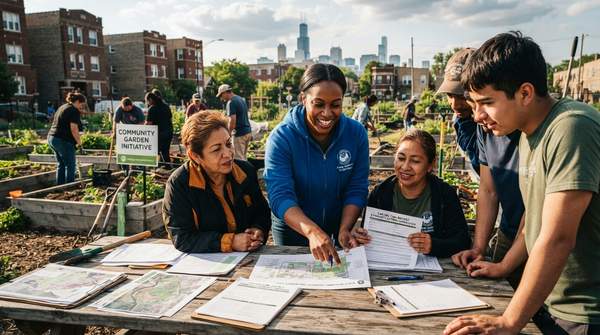
Starting a community garden in Chicago begins with people, not plants. Before any seeds go in the ground, organizers need a committed group and, if they want to build on park land, a formal application to the Chicago Park District. That application is a defined package of documents — from a site survey and garden design to a petition and liability waiver — and the Park District states plainly what it requires to form a new garden.
Forming Your Community Garden Group
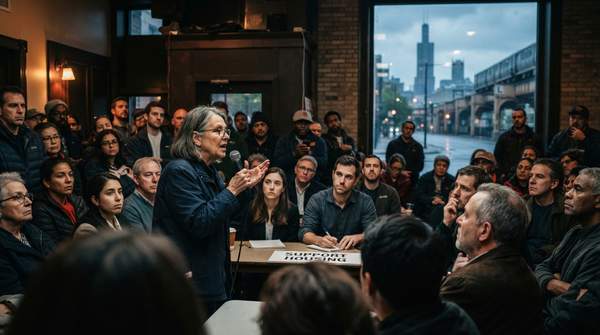
Community gardens are, by definition, collaborative projects, and the earliest work is organizational. Guidance collected by the National Environmental Education Foundation, drawing on the American Community Garden Association's "10 Steps to Starting a Community Garden," recommends forming a planning committee, conducting a resource assessment, and determining ground rules for participation as the opening moves. A garden organizer quoted by NEEF, Toy, put the core idea simply: "In the beginning, it can be hard for people to understand what a community garden is. The key is communicating that it isn't individual, it is about the community."
Those early decisions matter because the Park District's application asks about them directly. The application form for new groups requests the garden group's name, whether the group is new, and how many active members it has to date. A group that has not settled its name, membership, and ground rules before applying will struggle to answer even the first page. The form also asks about the intended type of garden — for example, ornamental versus edibles or a combination — which routes the application to different Park District departments.
The Chicago Park District: Your Land Authority
For gardens located in parks, the Chicago Park District is the land authority, and it operates a formal application process for new gardens. City Cast Chicago, in a gardening guide published in April 2025, reported that with more than 70 community gardens already in parks around the city, the Park District maintains a location request form for new gardens along with a checklist of what organizers need to get a garden up and running.
One point the Park District itself emphasizes: all gardens in parks are and will continue to be public property. The district supports efforts to reduce vandalism and theft but cannot guarantee that any garden is free from that risk. Organizers should plan for that reality — shared, public land means shared, public exposure — and it is one reason the application process asks groups to demonstrate organization and commitment up front.
Navigating the Chicago Park District Application
The Park District's community gardens page lists the documents required to form a new garden. The package includes a New Garden Application Checklist, followed by a series of numbered forms: Form 1, the New Garden Application itself; Form 2, a New Garden Site & Usage Survey; Form 3, a Garden Design and Budget; Form 4, a New Garden Petition; Form 5a, an Initial Letter of Commitment; Form 6a, a Liability Waiver; and Form 7a, a Garden Group Description.
The application form — titled "Community Gardens in the Parks Application Form – New Group Part 1" — requests the garden group's name and contact details, whether it is a new group, the number of active members to date, and the type of garden, such as ornamental. It also specifies that the primary and alternate contacts may not be in the same immediate family and may not reside at the same address — a rule that pushes groups to demonstrate breadth in their leadership rather than relying on a single household.
Completed forms are mailed with pictures to the Park District's offices at 541 N. Fairbanks Ct. in Chicago. The destination depends on the garden type: ornamental gardens go to the Department of Natural Resources on the 6th floor, while edibles or combination gardens go to Environment, Culture & Special Events on the 4th floor, both marked to the attention of "Community Garden Application."
Support from the Chicago Community Gardeners Association (CCGA)
Beyond the Park District, the Chicago Community Gardeners Association functions as a support network for the city's community gardeners. A 2026 resource guide from Litter Caterpillars describes the CCGA as a place where gardeners share tips and encourage one another — comparing it to a conversation group for learning a language, rather than struggling alone.
The same guide notes that CCGA-oriented resources extend to stewardship guidance on topics such as bylaws, leadership structure, fundraising, and conflict resolution — precisely the ground-level questions a new planning committee faces before it ever reaches the Park District's forms. The evidence here is general: it describes the CCGA's overall support role rather than an exhaustive catalog of its services, so organizers should treat it as a starting point and contact the organization directly for specifics.
Your Initial Checklist for Starting a Chicago Community Garden
The following checklist merges the general group-formation advice with the Park District's specific document requirements into a single sequential plan. Phase one builds the organization the application asks about; phase two assembles the paperwork the Park District requires.
Phase 1: Community & Planning
- Form a planning committee of neighbors and interested residents.
- Conduct a resource assessment — what people, skills, and materials the group can draw on.
- Determine ground rules for participation and how the garden will be governed.
- Settle on a garden group name and recruit active members, keeping count.
- Decide the type of garden — ornamental, edibles, or a combination — since this determines the application's destination.
- Choose a primary contact and an alternate who are not in the same immediate family and do not reside at the same address.
Phase 2: Official Application Documents
- Download the CG New Garden Application Checklist.
- Complete Form 1: New Garden Application (group name, contacts, member count, garden type).
- Complete Form 2: New Garden Site & Usage Survey.
- Complete Form 3: Garden Design and Budget.
- Complete Form 4: New Garden Petition.
- Complete Form 5a: Initial Letter of Commitment.
- Complete Form 6a: Liability Waiver.
- Complete Form 7a: Garden Group Description.
- Mail the completed forms with pictures to the correct Park District department based on garden type.
Next Steps: Submitting Your Application and Building Your Garden
Aspiring community garden organizers should prioritize forming a committed group and diligently preparing all required documents for the Chicago Park District application. The measurable indicator of progress through this initial phase is the successful submission of the complete Chicago Park District New Community Garden Application, including all listed forms and supporting information. Until that package — checklist, application, survey, design and budget, petition, commitment letter, waiver, and group description — is assembled and mailed, a new garden remains an idea; with it, the group has taken the first official step toward park land.
Sources
- Community Gardens — Chicago Park District
- Client Challenge — SCRIBD
- Start a Community Garden to Grow Healthy Food and New Neighborhood Connections — The National Environmental Education Foundation (NEEF)
- How To Garden in Chicago - City Cast Chicago — City Cast Chicago - Daily Podcast and Newsletter
- My Guide to 7 Amazing Chicago Community Gardens & Resources for 2026 – Litter Caterpillars — Littercaterpillars